Vlog 7
Tired of DIY Painting Disasters?
June 11. 2026

It usually starts the same way.
You watch a 10-minute video, grab a few gallons of paint on a Saturday morning, and figure you'll have the living room done by Sunday night. Two weekends later, you're staring at roller marks on the wall, paint on the baseboards, and a ceiling line that looks like it was drawn during a boat ride.
If that sounds familiar, you're not alone. We've repainted a lot of rooms that started as DIY projects, and we've heard the same story from homeowners all over the Emerald Coast. So let's talk honestly about why painting goes sideways, what it actually costs to do it yourself, and how to know when a project is worth handing off.
Why Painting Looks Easier Online Than It Is in Real Life
Those satisfying time-lapse videos skip the hard parts. You see the roller gliding across the wall. You don't see the three hours of prep that happened before it, or the second coat, or the touch-ups the next day.
Painting is one of those trades where the skill is invisible when it's done right. A clean cut line along the ceiling looks effortless. It isn't. It's the result of a steady hand, the right brush, and years of repetition. The video makes it look like anyone can do it in an afternoon because, for the person filming it, that's true. They've done it a thousand times.
The Most Common DIY Painting Mistakes (And Why They Happen)
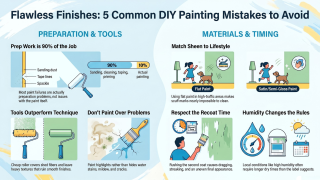
After years of fixing DIY projects, these are the mistakes we see over and over:
Skipping prep. This is the big one, and we'll get to it below. Most paint failures aren't paint problems. They're prep problems.
Using the wrong roller or brush. A cheap roller cover sheds fibers into your finish and leaves a heavy texture. The wrong brush makes clean lines nearly impossible. Tools matter more than most people expect.
Not buying enough paint, or buying the wrong sheen. Run out mid-wall and the new can may not match perfectly. Choose a flat paint for a hallway with kids and dogs, and you'll be scrubbing scuff marks off within months.
Painting over problems. Paint doesn't hide water stains, mildew, or cracking. It highlights them. Stains bleed through, and paint applied over a damp or chalky surface peels.
Rushing the second coat. Recoating before the first coat dries causes dragging, streaking, and an uneven finish. Here on the Gulf Coast, humidity stretches dry times longer than the label says.
None of these mistakes happen because homeowners are careless. They happen because the details aren't obvious until you've learned them the hard way.
Prep Is 70% of the Job
Ask any professional painter what separates a finish that lasts ten years from one that fails in two, and you'll get the same answer: preparation.
Real prep means cleaning the walls, repairing nail holes and drywall damage, sanding glossy surfaces so new paint can grip, caulking gaps around trim, priming stains and bare patches, and protecting floors and furniture properly. On an exterior job, add pressure washing, scraping loose paint, and treating mildew which is a constant battle in Florida's climate.
It's tedious. It's also the difference between paint that bonds to the surface and paint that's just sitting on top of it, waiting to peel.
Quick tip: Before painting any room, wash the walls with a mild cleaner and let them dry completely. Even invisible household grime can keep paint from adhering.
Paint Selection Matters More Than You Think
The paint aisle is overwhelming for a reason those products are genuinely different.
Sheen affects both looks and durability. Flat hides wall imperfections but scuffs easily. Satin and eggshell clean up better and suit busy areas. Semi-gloss is the standard for trim, doors, and bathrooms.
Quality matters too. Budget paint often needs three coats to do what a premium paint does in two, which erases most of the savings. And on exterior work along the coast, paint formulated for salt air, UV exposure, and humidity isn't a luxury it's the only thing that holds up.
Quick tip: Buy sample pots and paint a large swatch on the actual wall. Look at it in morning light, afternoon light, and lamplight before you commit. Color shifts dramatically with lighting.
The Hidden Costs of DIY Painting
The paint itself is only part of the bill. A proper DIY setup means rollers, covers, brushes, trays, painter's tape, drop cloths, patching compound, caulk, primer, a sturdy ladder, and more. For homeowners starting from scratch, supplies alone often run a few hundred dollars for tools many people use once.
Then there's time. An "easy weekend project" routinely turns into 20–30 hours across several weekends once prep, two coats, trim, and cleanup are counted. That's time away from family, work, and everything else.
And the most expensive cost is the redo. If the finish fails peeling, streaking, visible lap marks fixing it means buying more materials and either repeating the whole job or paying a professional to strip and repaint. We're often called to redo DIY projects, and correcting a failed paint job costs more than painting it right the first time would have.
When DIY Becomes a Safety Issue
Some projects carry real risk, and it's worth being honest about them:
Stairwells and two-story foyers require ladder work at awkward angles over hard surfaces. Falls from ladders are one of the most common home-improvement injuries, and stairwells are where many of them happen. Ceilings mean hours of overhead work that strains your neck and shoulders, with drips landing on everything below. Exterior painting puts you on extension ladders, sometimes on uneven ground, often in Florida heat. And homes built before 1978 may have lead paint, which requires specific handling to disturb safely.
If a project requires you to stretch, balance, or improvise on a ladder, that's not a painting project anymore. That's a risk calculation.
Signs a Project Is Better Left to a Professional
DIY can absolutely make sense. A bedroom with eight-foot ceilings, walls in good shape, and no trim work? If you've got the patience for prep, go for it and take pride in it.
But consider calling a pro when the project involves high ceilings, stairwells, or any serious ladder work; exterior surfaces exposed to coastal weather; water damage, cracking, peeling, or mildew that needs correction before painting; cabinets or trim, where finish quality is unforgiving; a whole house or multiple rooms on a deadline; or a home old enough that lead paint could be in play.
A good rule of thumb: the more a mistake would cost to fix, the stronger the case for hiring it out.
Why Professional Results Look (and Last) Different
It's not a secret formula. It's the unglamorous stuff done consistently: thorough surface prep, the right primer for each situation, quality paint matched to the room and climate, proper technique that prevents lap marks and roller texture, and clean cut lines done freehand with a steady brush.
Professionals also work fast without rushing a crew can finish in two days what takes a homeowner a month of weekends and a reputable company stands behind the work. If something isn't right, they come back and fix it.
Before You Start Any Painting Project
Whether you DIY or hire it out, walk through this first:
Inspect your surfaces honestly stains, cracks, peeling, and soft spots need solutions, not coverage. Be realistic about the total hours, not just the fun rolling part. Price out everything, including tools and primer, before comparing DIY costs to a professional quote. Check the weather if you're painting outside, since humidity and rain windows matter on the Gulf Coast. And get a professional estimate even if you're leaning DIY it's free, and it gives you a real number to compare against.
When You're Ready for Help, We're Here
Some painting projects are perfect weekend DIYs. Others will cost you more in time, money, and frustration than they're worth and it's hard to know which is which until you're halfway in.
That's where we can help. Emerald Coast Painters works with homeowners throughout Pensacola, Navarre, Fort Walton Beach, Destin, Niceville, Crestview, and the 30A corridor. We handle the prep, the ladders, the color questions, and the cleanup and we leave behind a finish that's built to last in coastal Florida conditions.
Not sure whether your project is a DIY job or a pro job? Ask us. We'll give you an honest answer either way.
Ready for a paint job you don't have to redo? Contact Emerald Coast Painters today for friendly advice or a free, no-pressure estimate. Let's make your next painting project the easy kind.