Blog 15
Frustrated with Uneven Paint Coverage? Here's What's Really Going On
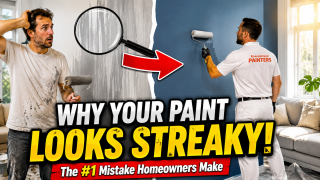
You painted your living room, stepped back, and noticed it immediately. Thin spots. Streaks. Areas that look fine in the morning but blotchy in the afternoon light. Maybe you tried a second coat and it still looks off.
You're not imagining it, and you're not alone.
Uneven paint coverage is one of the most common complaints homeowners have after a DIY paint job, and it's also one of the leading reasons people in Gulf Breeze, Navarre, Fort Walton Beach, and Destin call a professional painter to fix what started as a weekend project.
The good news is that this problem has real, fixable causes. The better news is that when you hire experienced house painters in Gulf Breeze, you get a finished result that actually looks the way you imagined it would.
Let's break down why uneven coverage happens, what it costs to fix, and how to make sure it never happens again.
---
Why Paint Coverage Goes Uneven in the First Place
Uneven coverage is rarely caused by just one thing. It's usually a combination of factors that compound each other. Here are the most common culprits.
The Paint Was Not Mixed Properly
Paint separates during storage. If you didn't stir it thoroughly before application, or if you used paint that had been sitting for months, the pigment and binder won't be evenly distributed. The result is color that shifts across the wall.
The Surface Was Not Prepped
This is the big one. Painting over a dirty, glossy, or porous surface is like trying to write on a greasy piece of paper. The paint won't grip evenly, and you'll see it immediately. Surfaces that have old paint peeling, drywall patches, or stains from water or smoke are especially prone to this.
In the Gulf Breeze and Navarre area, humidity and salt air create unique surface challenges. Exterior walls especially tend to develop mildew, chalking, and moisture damage that must be cleaned and treated before any paint is applied.
The Wrong Primer Was Used (or None at All)
Primer is not optional. It creates a uniform base so your topcoat applies consistently. Skipping primer, or using an interior primer on an exterior surface, is a shortcut that always shows up later.
Too Much or Too Little Paint on the Roller
Overloaded rollers create thick, stippled texture and runs. Rollers that are too dry leave thin, streaky lines. Getting the right amount of paint on the roller is a skill that takes practice, and it matters more than most people realize.
The Wrong Sheen for the Surface
Flat and matte paints hide surface imperfections but show uneven application more easily than satin or eggshell. If you chose a flat finish for a wall that had patched areas or texture differences, you may see shadows and inconsistency even when the paint is technically applied correctly.
Heat and Humidity in Florida
This one is specific to our area. Painting in high humidity or direct Florida sun causes paint to dry too fast or too unevenly across a surface. The Emerald Coast is beautiful, but it is not forgiving when it comes to exterior paint application timing. Professional painters know the right windows to work in, especially in the summer.
---
What Uneven Coverage Actually Looks Like
Homeowners describe it in different ways, but the symptoms usually fall into a few categories.
Lap marks are horizontal lines left when a wet edge dries before the next section is applied. They show up clearly once the paint is fully cured. Thin spots are areas where you can still see the original color or drywall underneath. They often look lighter or more washed out than the rest of the wall.
Streaking usually runs vertically and is caused by brush or roller technique. Shadowing is subtle unevenness that only shows up in raking light or in photos. And blotchiness is what happens when paint soaks into certain areas more than others, especially on unprimed drywall or porous wood surfaces and blotchiness is what happens when paint soaks into certain areas more than others, especially on unprimed drywall or porous wood surfaces. It tends to show up worst on ceilings and freshly patched walls.
If you're seeing any of these, the paint itself is usually not the problem. The surface underneath it is.
Can You Fix Uneven Paint Coverage Yourself?
Sometimes, yes. It depends on what caused it.
If the issue is one thin spot in a corner or a single lap mark, another coat applied with a properly loaded roller may clean it up. Work in full sections, keep a wet edge, and roll from ceiling to floor in one pass instead of stopping halfway.
But here's where most homeowners get stuck. If the real problem is prep, primer, or moisture, adding more paint just locks the problem in. You end up with three coats of paint sitting on a surface that was never ready for the first one. Now you're looking at sanding, scraping, or in some cases full removal before anything can be fixed properly.
That's the point where a second coat stops being a solution and starts being an expense.
How Professional House Painters Fix It for Good
A real fix starts long before anyone opens a can of paint. Here's what the process actually looks like when it's done right.
Step 1: Wash and Clean the Surface
Every exterior job should start with a proper power wash. On the Gulf Coast, walls collect salt, mildew, pollen, and chalking that you can't always see. Paint will not bond to any of it. This one step is the difference between a finish that lasts eight years and one that fails in two.
Interior surfaces get cleaned too, especially kitchens, bathrooms, and anywhere near a garage.
Step 2: Repair Before Painting
Drywall dings, nail pops, hairline cracks, rotted trim, and failed caulk all get addressed first. Patched areas get sanded flush and spot primed so they don't drink up paint differently than the wall around them. That single detail eliminates most blotchiness.
Step 3: Prime the Right Way
The right primer depends on the surface. Bare drywall, stained areas, glossy trim, bare wood, and stucco all call for different products. Matching primer to surface is what creates the even base that makes the topcoat look uniform.
Step 4: Apply in the Right Conditions
Timing matters in Florida more than almost anywhere. Painting a west-facing exterior wall at 2 p.m. in July is asking for lap marks. Experienced crews chase the shade, watch the humidity, and stop when conditions turn instead of pushing through and hoping it cures right.
Step 5: Two Full Coats, Checked in Real Light
Two coats, back rolled where needed, then inspected in natural light from multiple angles. Not phone flashlight light. Real daylight, which is the only way you catch shadowing before the crew leaves.
Why Gulf Coast Homes Are Harder to Paint Than Most
If you moved here from somewhere else and your old paint jobs lasted forever, this part will make sense fast.
Homes in Gulf Breeze, Navarre, Fort Walton Beach, Mary Esther, Destin, and along the 30A corridor deal with salt air, heavy humidity, intense UV exposure, and afternoon storms that roll in with no warning. That combination breaks down paint faster and makes surface prep non negotiable.
It also means the product choice matters. The right exterior coating for a home three blocks off the water is not the same as one for a home ten miles inland. Sheen, film thickness, and mildew resistance all come into play.
This is why a paint job that looked great in another state can start failing here in a year or two.
What It Costs to Fix Uneven Paint
Pricing depends on a few things:
- Square footage of the affected area
- How much prep is required, which is usually the biggest cost driver
- Whether existing paint has to come off before new paint goes on
- Interior or exterior, since exterior work involves washing, staging, and weather timing
- Surface type, since stucco, wood, and drywall each behave differently
A single room that just needs proper prep and two coats is a small job. A full exterior with peeling paint and moisture damage is a bigger one. The honest answer is that no painter can quote it accurately without seeing it, and any painter who quotes it sight unseen is guessing.
A walkthrough and written estimate should always come first.
How to Avoid Uneven Coverage Next Time
Whether you hire out or DIY the next one, these are the habits that prevent it:
- Stir the paint fully, and stir again halfway through the job
- Clean the surface, even when it looks clean
- Prime every patch, stain, and bare spot
- Buy quality paint, since cheap paint has less pigment and needs more coats
- Use a roller nap matched to your surface texture
- Keep a wet edge and finish full walls in one session
- Avoid painting in direct sun or above 85 percent humidity
- Plan for two coats from the start instead of hoping one will do it
Frequently Asked Questions
Will a third coat fix uneven paint?
Only if the surface underneath was prepped correctly. If it wasn't, more coats make the problem worse and more expensive to correct later.
How long should I wait between coats?
Follow the label, but in Gulf Coast humidity, give it more time than the can says. Recoating too early is a common cause of streaking and peeling.
Can uneven paint be a sign of moisture damage?
Yes. Blotchy or bubbling areas on exterior walls and ceilings often point to moisture getting in from somewhere. That needs to be found and fixed before painting, or it will come back.
Is it cheaper to repaint or to fix the bad areas?
For interiors, spot fixing sometimes works. For exteriors and full rooms, repainting the whole surface usually delivers a better result for close to the same cost, because prep and setup drive the price more than paint does.
Get It Done Right the First Time
Uneven paint coverage is fixable. It just takes prep, the right products, and a crew that knows how Gulf Coast conditions affect a finish.
Emerald Coast Painters serves homeowners from Pensacola to the 30A corridor, including Gulf Breeze, Navarre, Fort Walton Beach, Mary Esther, Destin, Santa Rosa Beach, and Panama City Beach. Interior painting, exterior painting, cabinet refinishing, drywall repair, and pressure washing.
Ready for a finish you don't have to squint at? Book your free estimate at www.bookecp.com.