vlog 4
Concerned about the impact of weather on your paint?
October 01, 2026
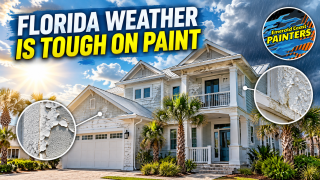
So if your paint is peeling, fading, or bubbling, the weather is almost always the reason.
The good news? Most of this damage is preventable. With the right prep, the right products, and experienced house painters in Santa Rosa Beach, FL, your home can stay sharp for years.
Here’s what the weather is doing to your paint, how to spot damage early, and how to pick a painter who actually understands coastal homes.
Why Florida’s Climate Is So Hard on Exterior Paint
A paint job that lasts ten years somewhere mild can start failing much sooner here. These are the four big reasons.
1. Intense Sun and UV Rays
The Florida Panhandle gets strong sun most of the year. UV rays slowly break down paint, which causes fading, chalky walls, and brittle surfaces.
South and west facing walls take the most heat. If one side of your house looks worse than the rest, that’s usually why.
2. High Humidity
Humidity here stays high for most of the year. When moisture sneaks behind the paint, you get blistering, peeling, and sometimes wood rot or mold under the surface.
It shows up most on wood siding, older homes, and around windows and doors where caulk fails first.
3. Salt Air
Homes near the Gulf, Western Lake, and the coastal dune lake communities along Scenic Highway 30A deal with something inland homes don’t: salt air.
Airborne salt eats away at paint edges, caulk, sealants, and metal fasteners. The closer you live to the water, the more often your home needs an inspection and fresh paint.
4. Afternoon Storms
Spring and summer bring almost daily afternoon thunderstorms. Heavy rain, then hot sun, then rain again. That cycle pushes water into every crack and then forces moisture back out through the paint, causing it to lift and bubble.
Warning Signs Your Paint Has Weather Damage
Take a quick walk around your home and look for:
- Peeling or bubbling paint
- Fading or chalking (white powder when you rub the wall)
- Cracking that looks like a dried creek bed
- Rust streaks running down from nails or metal hardware
- Cracked, shrinking, or missing caulk around windows and doors
- Dark stains or mildew, especially on shady walls
Catch these early. Once moisture gets into the wood or stucco underneath, a simple repaint won’t fix it. You may need wood replacement, stucco repair, or rot repair first.
What the Best House Painters in Santa Rosa Beach Do Differently
Not every painter is built for coastal homes. A crew that does great work inland may have no idea what salt air and Gulf humidity do to paint. Here’s what separates the pros.
They Start With Real Surface Prep
Prep is where paint jobs succeed or fail. A quality crew power washes the whole exterior to remove salt, dirt, chalk, and mildew. Then they scrape loose paint, sand rough edges, and treat mildew so it doesn’t grow back.
Most important, they let the surface dry fully before painting. In our humidity, rushing this step is one of the fastest ways to get peeling paint a year later.
They Fix What’s Under the Paint
New paint over rotten wood or failed caulk is just a cover up. The problem comes right back. A good contractor checks for soft wood, cracked stucco, damaged trim, and gaps around windows and doors, then repairs and seals everything before the first coat.
They Use Coatings Made for the Coast
Cheap paint doesn’t last on the Emerald Coast. Premium exterior acrylics stay flexible in the heat, resist UV fading, block moisture, and fight mildew.
For stucco and masonry, the right primer and a high build coating help bridge small cracks and keep water out. The product should match your surface, your sun exposure, and how close you are to the water.
They Prime the Right Way
Bare wood, patched spots, rust, and new stucco all need the correct primer. Skipping primer is a common shortcut that leads to rust bleed, poor adhesion, and early failure.
They Work With the Weather
Local painters plan around our climate. That means starting early, watching humidity and dew point, and not painting when afternoon storms are rolling in. Fresh paint needs time to cure, and one surprise storm can ruin a full day of work.
They Apply Enough Paint
Two full coats at the right thickness give your home real protection. One thin coat may look fine on day one, but it won’t hold up to Florida sun and salt for long.
How Often Should You Repaint a Home in Santa Rosa Beach?
Many coastal homes need exterior repainting every five to seven years. Homes right on the Gulf, near a dune lake, or with heavy sun may need it sooner.
Surface matters too. Wood siding and trim usually need attention more often than stucco or fiber cement. A quick yearly check helps you catch small problems before they get expensive.
Easy Ways to Make Your Paint Last Longer
- Rinse your exterior once or twice a year to wash off salt
- Check caulk around windows, doors, and trim every spring
- Trim shrubs back so walls can dry out
- Clean gutters so water doesn’t spill down your siding
- Touch up chips and cracks before moisture gets in
- Treat mildew as soon as you see it
These small habits can add years to your paint job.
When Is the Best Time to Paint a House in Santa Rosa Beach?
Fall and spring are the sweet spots. Humidity drops, temperatures are milder, and the daily storms ease up. That gives paint better conditions to dry and cure.
Thinking about an exterior project? Now is a great time to get on the schedule before the best painting weather fills up.
Proudly Painting Homes Along 30A
Emerald Coast Painters is a family owned painting company serving Santa Rosa Beach and nearby communities, including Seaside, WaterColor, Grayton Beach, Blue Mountain Beach, Seagrove Beach, Dune Allen, Rosemary Beach, Inlet Beach, Miramar Beach, and Destin.
We live here too, so we know what Gulf Coast weather does to a home. From prep to final walkthrough, we paint with coastal conditions in mind.
Our services: exterior and interior painting, drywall repair, cabinet refinishing, power washing, deck and fence staining, pool deck coatings, and color consultations.
Frequently Asked Questions
How does humidity affect exterior paint?
High humidity can trap moisture under the paint. That leads to blistering, peeling, and mildew. Proper drying time and the right coatings help prevent it.
Does salt air really damage paint?
Yes. Airborne salt breaks down paint, caulk, and metal fasteners faster than normal. Homes near the water need more frequent rinsing and inspections.
Can you paint over peeling paint?
Not the right way. Loose paint has to be scraped, sanded, and primed first. Painting over it traps the problem, and it will peel again.
What exterior paint color lasts longest in Florida?
Lighter colors usually hold up better because they absorb less heat and show fading less. Premium paint with strong UV resistance also makes a big difference.
How long does an exterior paint job take?
Most homes take a few days to a couple of weeks, depending on size, prep, repairs, and weather.
Protect Your Home Before the Weather Wins
Florida weather is tough. Your paint can be tougher. The right prep, the right products, and the right team make all the difference.
If your paint is peeling, fading, or just looks tired, let’s take a look.